
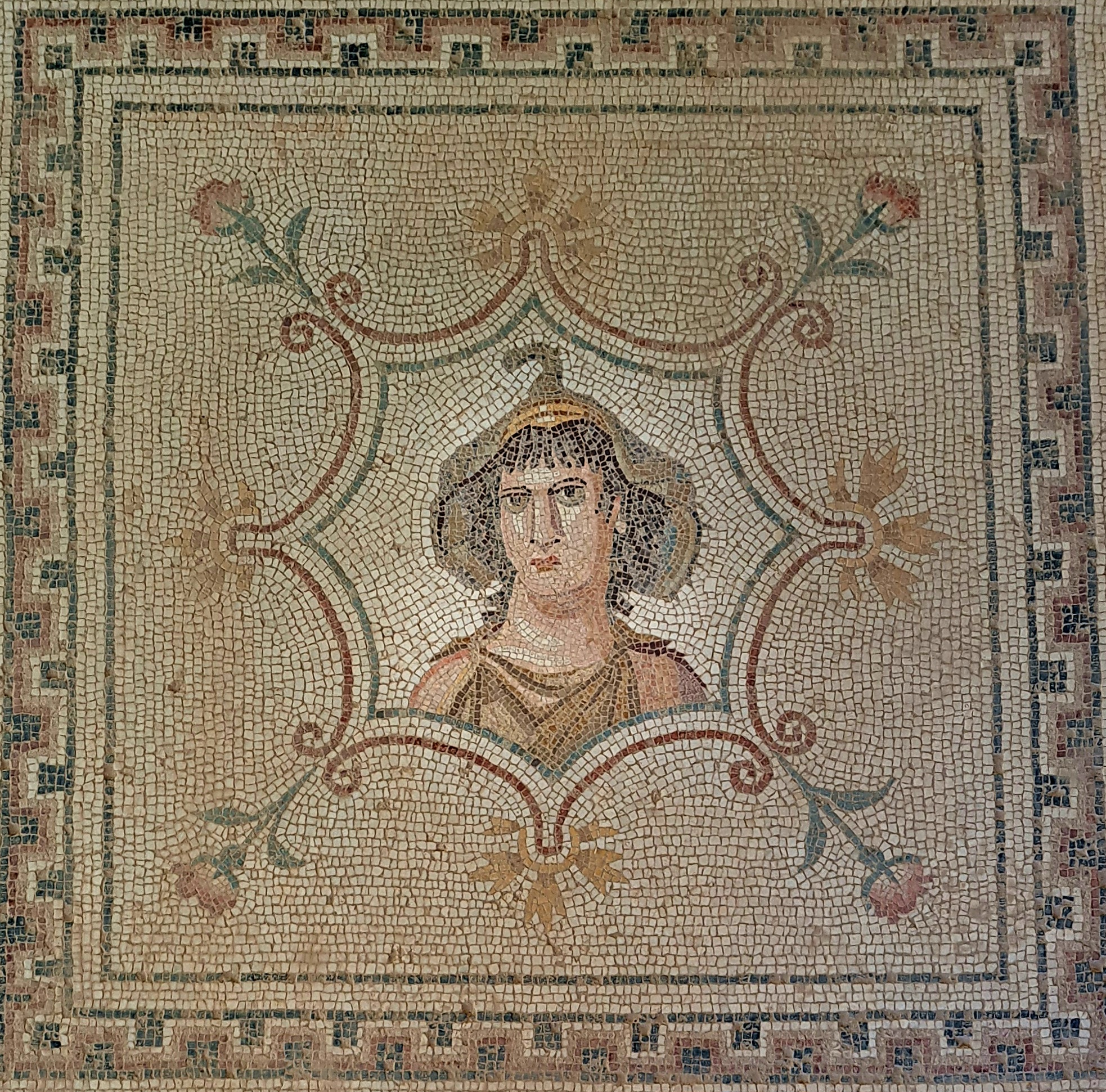
Those traveling through Tunisia in the footsteps of late antique Romans will repeatedly encounter confident expressions of ‘African’ identity. For example, there is a mosaic depicting the female personification of Africa wearing an elephant-head hat in a villa at El Djem (Thysdrus). During the second half of the twentieth century, scholars increasingly examined surviving late antique texts of North African origin for evidence of this identity attribution. Regarding Augustine’s African background, patristics scholar David Wilhite of Baylor University in Waco, Texas, has traced the development of this line of research. In a recent monograph, Catherine Conybeare, a classical philologist at Bryn Mawr College in Pennsylvania, has compiled her research on Augustine’s North African background, focusing on linguistic and intellectual history: Augustine the African, London: Profile Books, 2025, XX+268 pages.
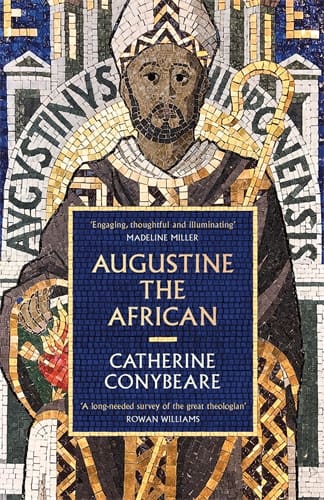
The book is intended for a general audience, which is why the author has structured it as a biography of Augustine. She refrains from discussing the extensive research she draws upon, limiting herself to concise endnotes. The narrative relies on a wealth of sources, and the author discusses important texts in greater detail. The first part (3–65) traces Augustine’s life from Thagaste to Hippo. The second part (69–115) examines his involvement in the dispute between the ‘African church’ (the Donatists) and the ‘church in Africa’ (Augustine’s ‘catholic’ church). The third part (119–151) is devoted to his ‘africitas,’ i.e., to the influence of the Punic culture on his mentality and language, and to his preaching style, tailored to his North African audience. The fourth part (155–222) looks at the last two decades of his life and addresses ‘The City of God’, the peregrinatio motif crucial to his self-understanding, his relationship to political power, and the Pelagian controversy.
The book demonstrates that Augustine’s roots in the social and intellectual world of economically and culturally prosperous Africa Proconsularis significantly shaped his life and are reflected in his work. Throughout the text, the author makes it clear that Augustine was “both an African and a Roman” (222) and demonstrates how the North African element remains recognizable and significant in the fusion of these two identities. Although Augustine’s significance in church history is discussed at length and – in the context of the Donatist controversy – also critically examined, the author does not address the influence of Africa on Augustine’s theology. Following her engaging “story of Augustine the African,” it is worthwhile to ask which North African conditions and traditions influenced Augustine’s powerful ideas about grace and the church and how much of the North African heritage is present in the Western church of the Middle Ages and modern era.
This book is an important addition to the existing literature on Augustine and is well-suited for those encountering this Church Father for the first time. The appendix provides a list of key figures, a timeline of Augustine’s life, a list of further English-language reading material, and a detailed index of people and subjects. The book’s shift in perspective – visualized by the map on page XII, which shows North Africa at the top and Italy at the bottom – invites readers to perceive Augustine in a more nuanced way, rather than readily appropriating him for the construction of their own tradition.