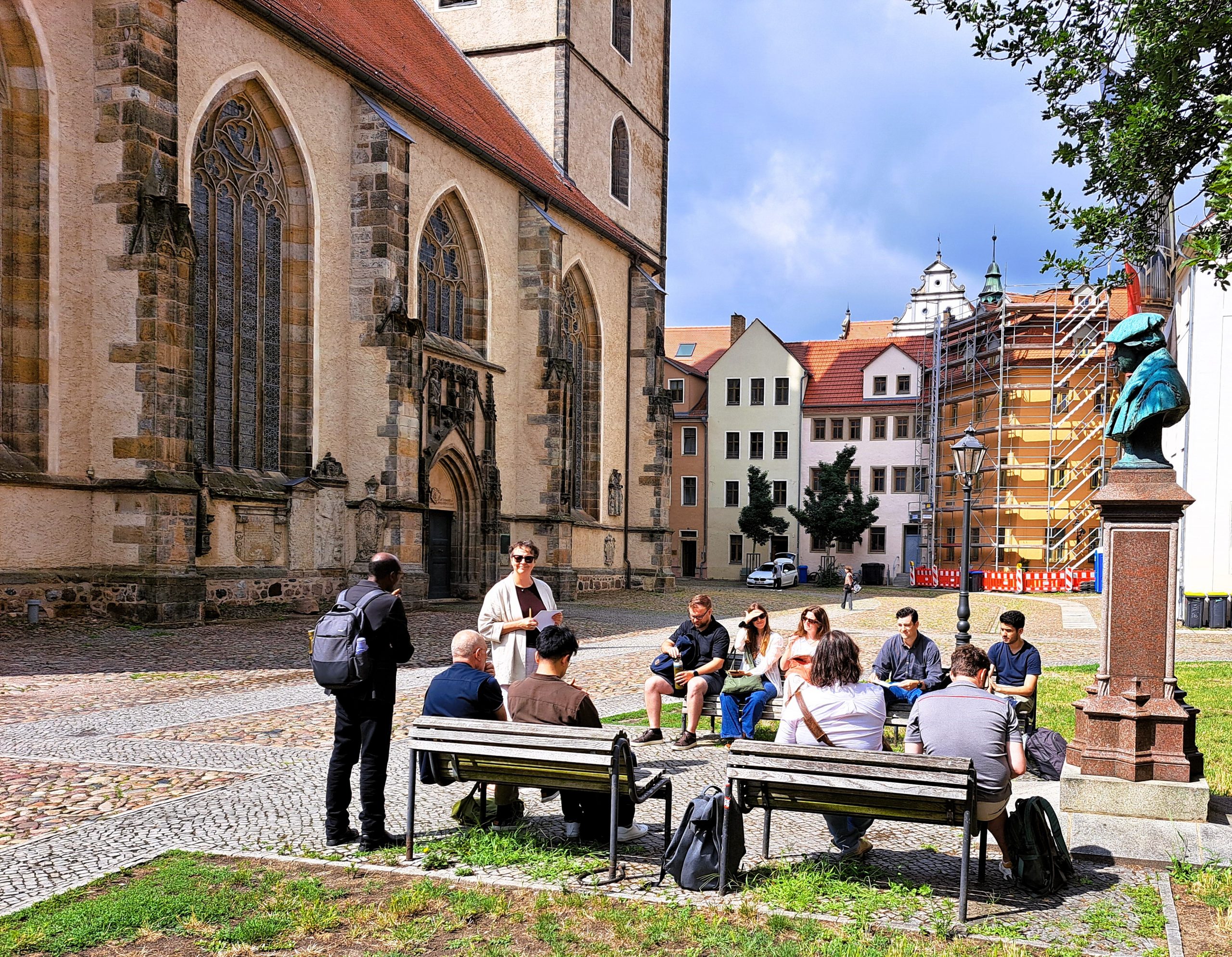

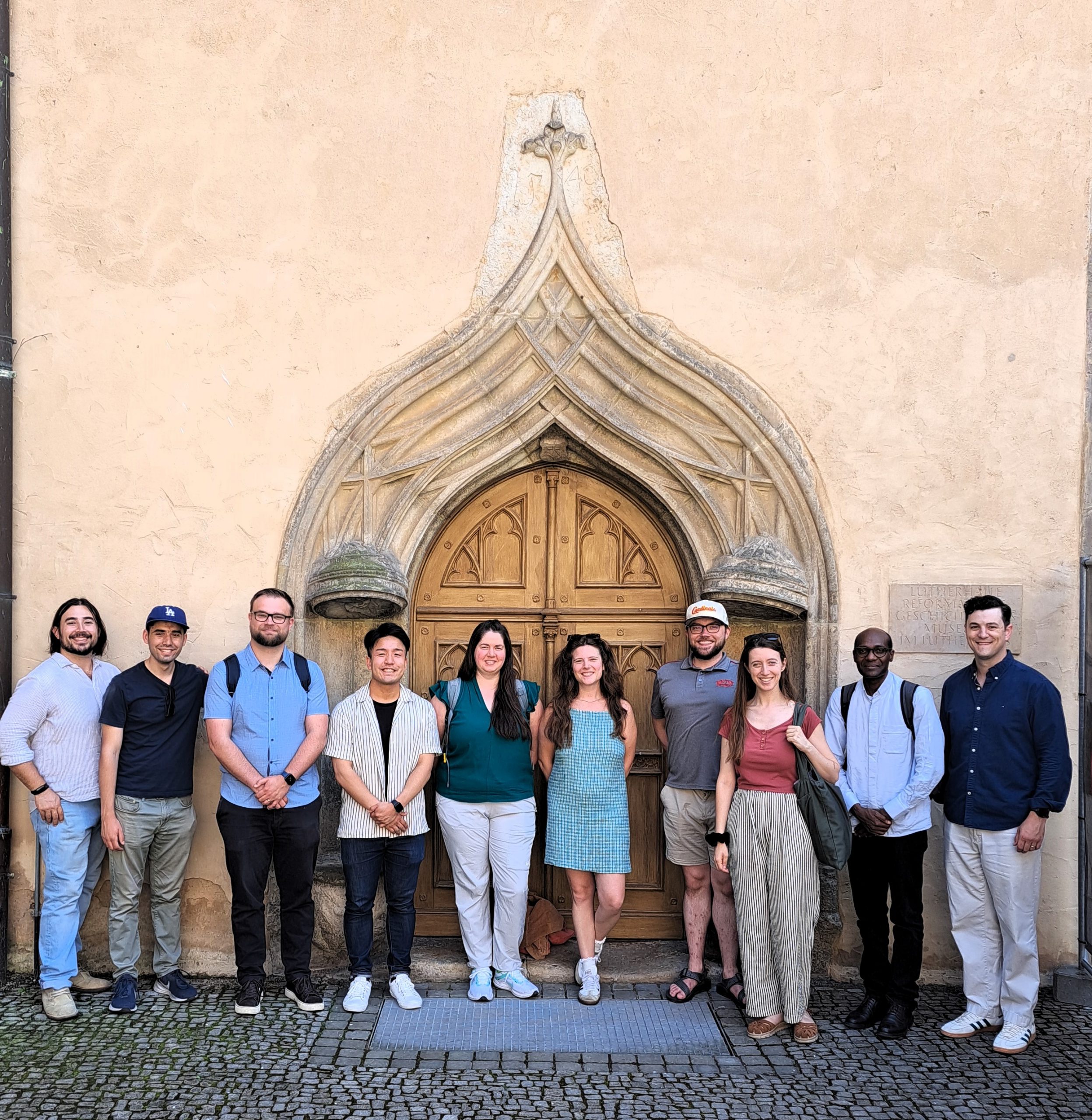
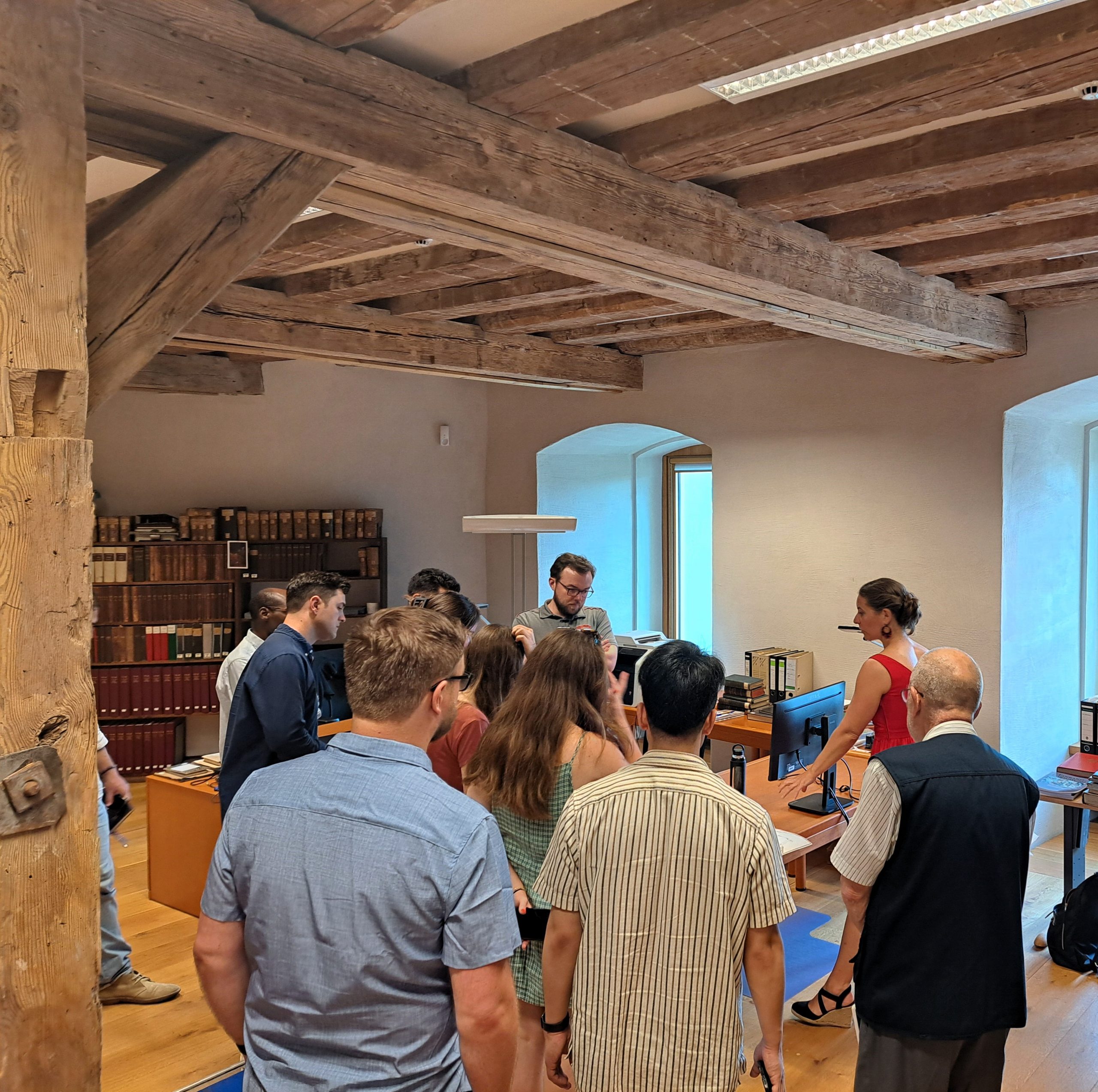
The 2026 Wittenberg Summer Course began on July 13. For four weeks, ten student fellows and one research fellow are in Wittenberg to explore the story of the Bible in the Reformation together. The first day began with an introduction to the history of Wittenberg by WCRS Director Andreas Stegmann, followed by a walk through the old town. At the castle, Dr. Caecilia-Désirée Hein, the director of the Reformation Research Library, welcomed the group and gave them a tour of the library. She presented Bible prints from the fifteenth and sixteenth centuries to illustrate the library’s extensive holdings. On Tuesday, July 14, Dr. Stegmann introduced the course topic, discussing seven common misconceptions and prejudices about the Bible in the sixteenth century.
The guest lecturer that day was Prof. Jennifer Powell McNutt from Wheaton College, editor of the Oxford handbook of the Bible in the Reformation, published in 2024. She introduced the group to current Reformation and Bible research and, in the afternoon, offered a source study on the impact of the Bible on liturgy and prayer in the Genevan Reformation. She emphasized the importance of recognizing the connections between the sixteenth century and earlier periods. However, the sources from Geneva demonstrate that the sixteenth-century reformers had a new understanding of the Bible’s significance and reorganized practical piety accordingly, making the Bible the source and means of Christian prayer and worship. Wednesday, July 15, was a study day, allowing the Student Fellows to work in the library.
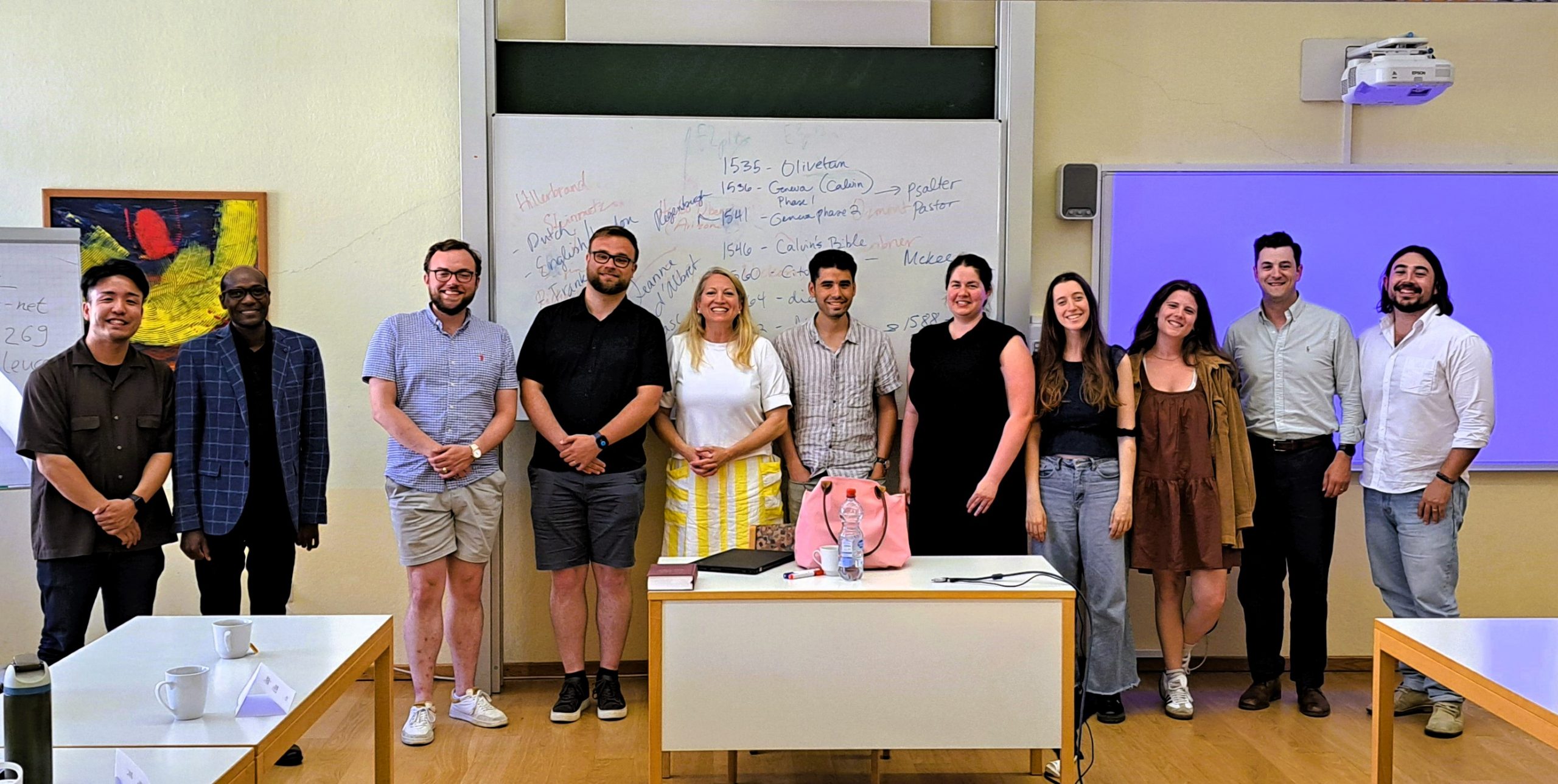
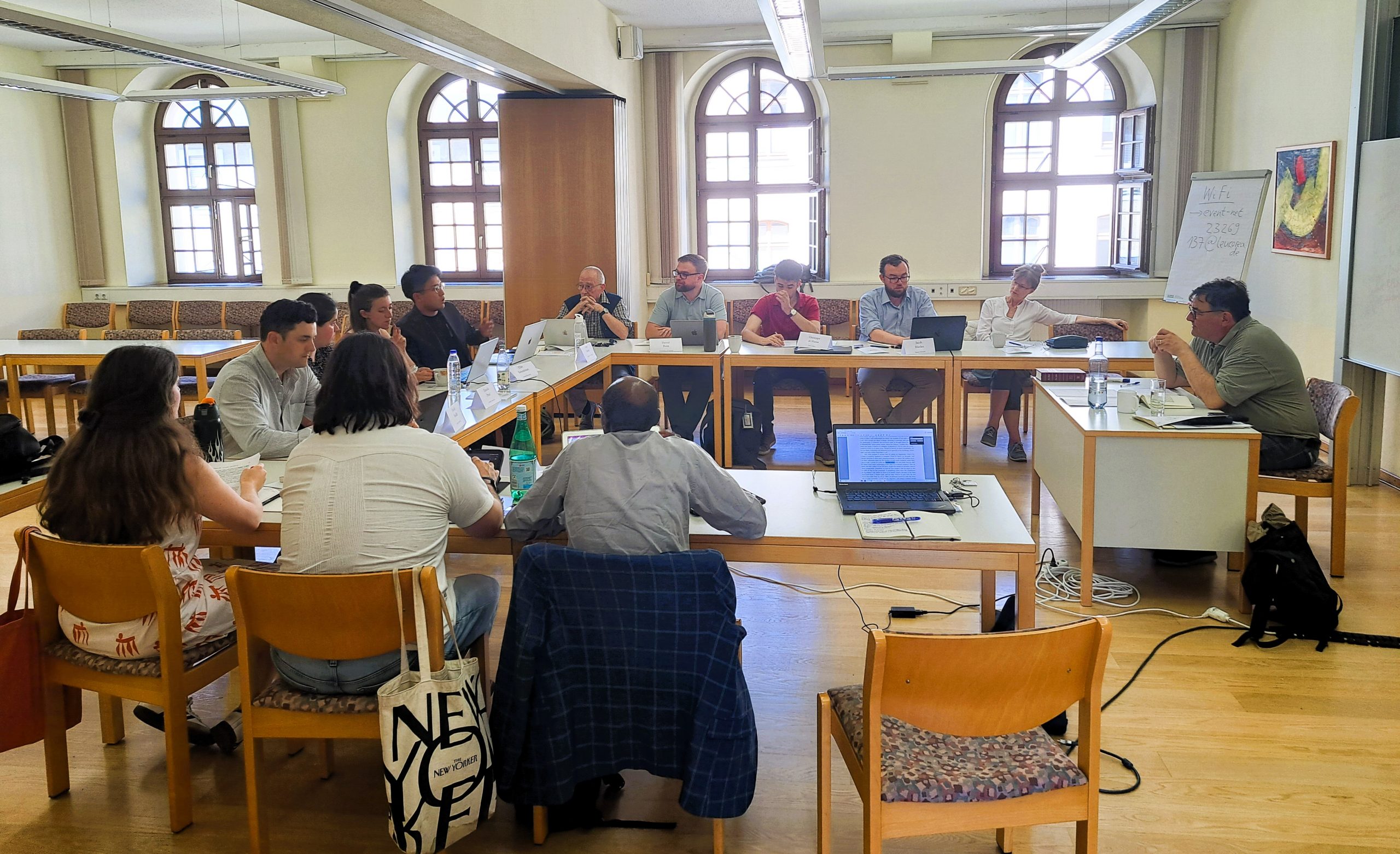
The next day, Thursday, July 16, the group first visited the Luther House. The day’s guest lecturer, Prof. Thomas Kaufmann from the University of Göttingen, introduced the group to his research on vernacular Bibles of the fifteenth century and the creation of Luther’s 1522 German new testament translation. Kaufmann clarified that Luther built on the late medieval vernacularization of the Bible and the humanist appeal for laypeople to read the Bible. Although there are pre-Reformation roots to the Reformation’s rediscovery of the Bible, Luther’s September Testament was a new development that proved to be a major change in the history of the Bible. In the afternoon, Prof. Kaufmann conducted a source study of Erasmus’s ‘Paraclesis,’ which is part of his 1516 Greek-Latin Bible, as well as Luther’s preface to the 1522 New Testament. This study highlighted the continuities and discontinuities between the late Middle Ages and the Reformation.
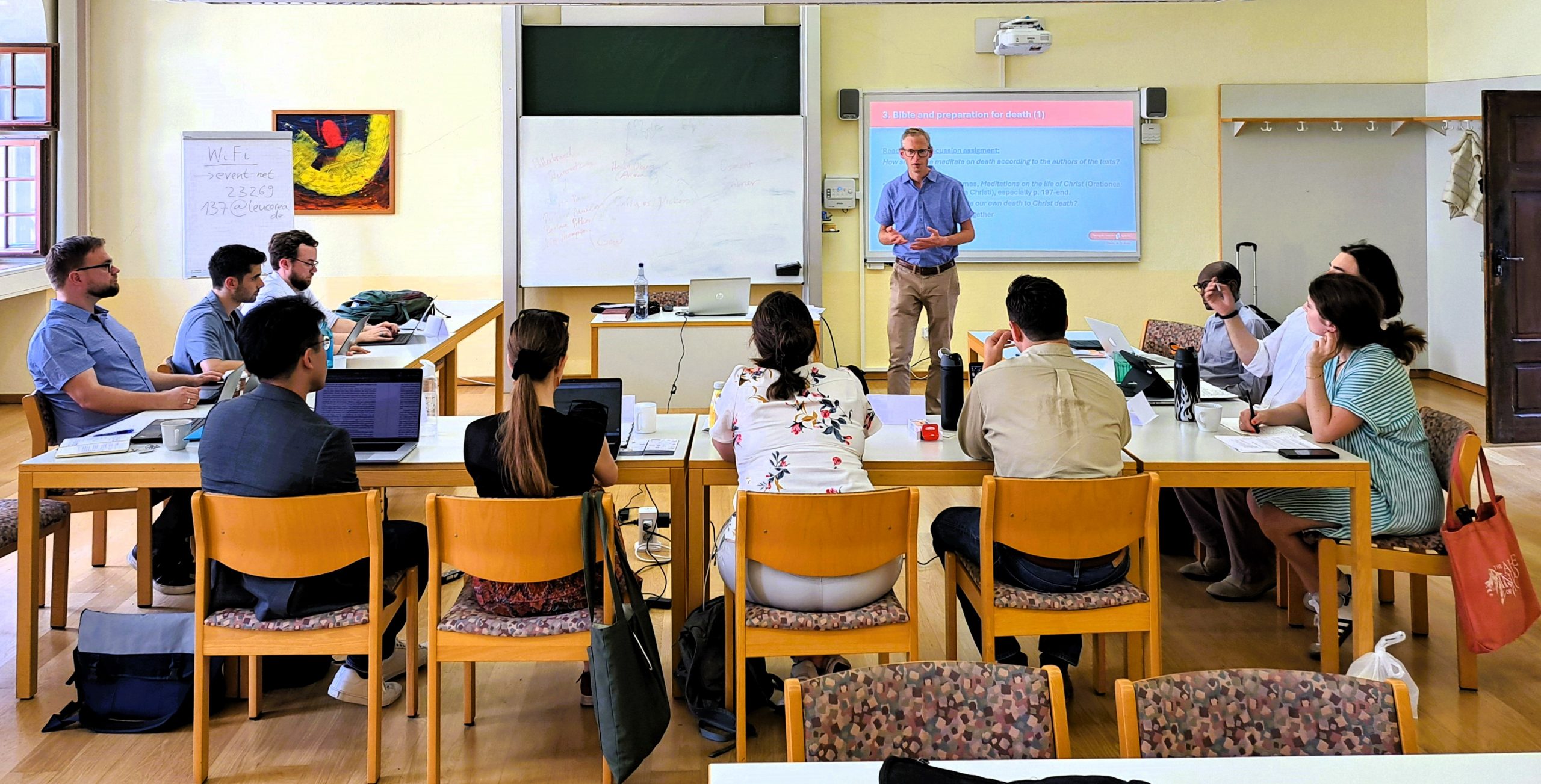
On Friday, July 17, Dr. Jan van de Kamp from the Theological University of Apeldoorn in the Netherlands introduced the group to Modern Devotion and its use of the Bible. The topic was again continuities and discontinuities because using books as a means of piety and reading the Bible played a significant role in the Modern Devotion. Together, the group interpreted programmatic texts on Bible reading from the fourteenth and fifteenth centuries, focusing on preparation for death. Dr. van de Kamp demonstrated that the art of dying well made use of the Bible. This remained true for early modern Protestants preparing for death.
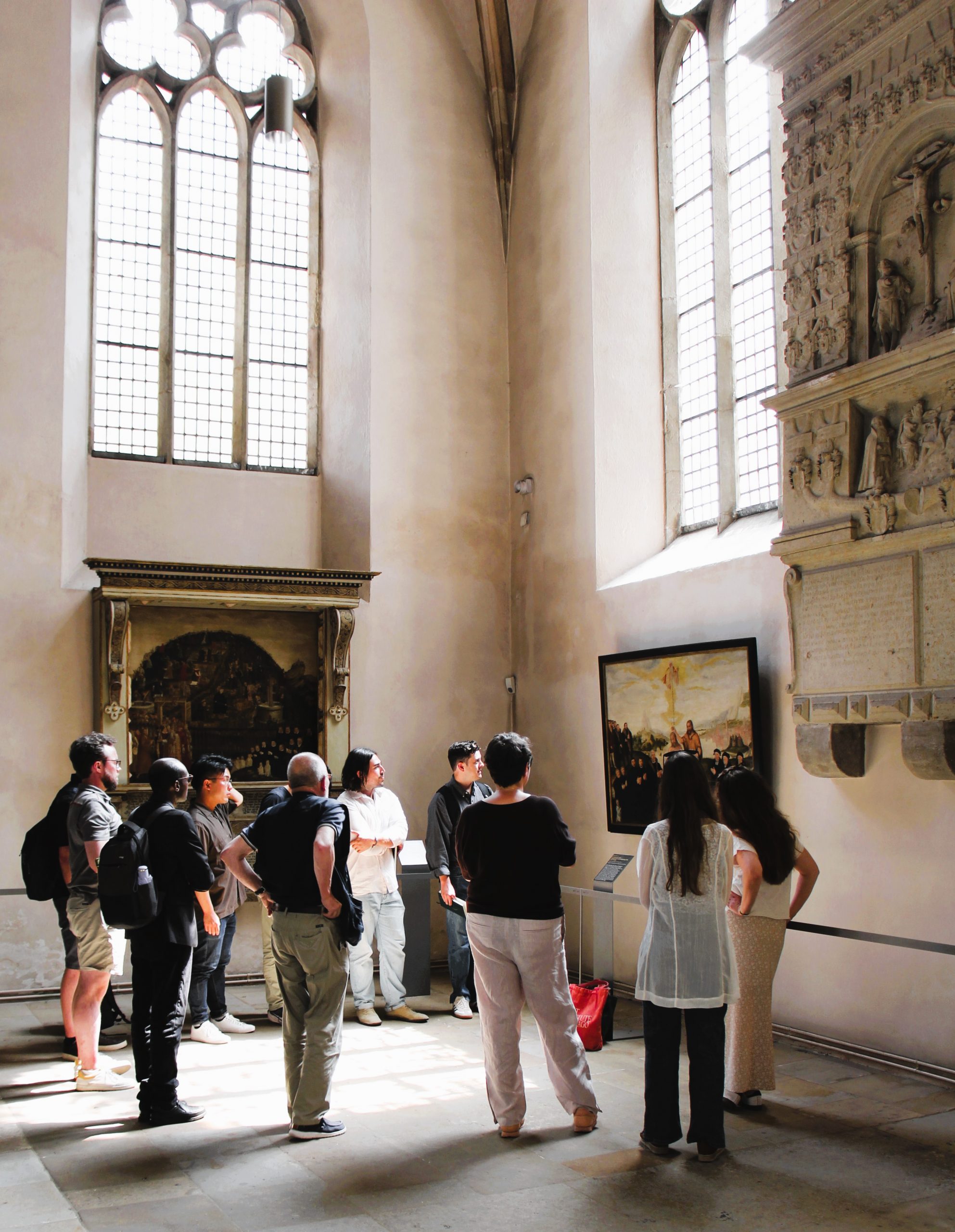
The first week ended on Saturday, July 18, with a visit to St. Mary’s parish church in Wittenberg. The group first climbed the towers and enjoyed the panoramic view of the city and its surroundings. Then, they met with Prof. Aleksandra Lipińska from the University of Cologne. This Polish art historian specializes in early modern art north of the Alps, with a particular interest in church architecture and furnishings. She introduced the group to the new research focus that has emerged in recent decades: considering the materiality of objects, their spatial positioning, and their actual use over time. Inside the church, the group split up into five teams, each analyzing a single item and paying special attention to the significance of the Bible. Then, the group shared their findings, and Prof. Lipińska expanded on them. Back at the Leucorea, she further explained the significance of the church art in St. Mary’s and demonstrated how art history can contribute to the study of the Reformation.