
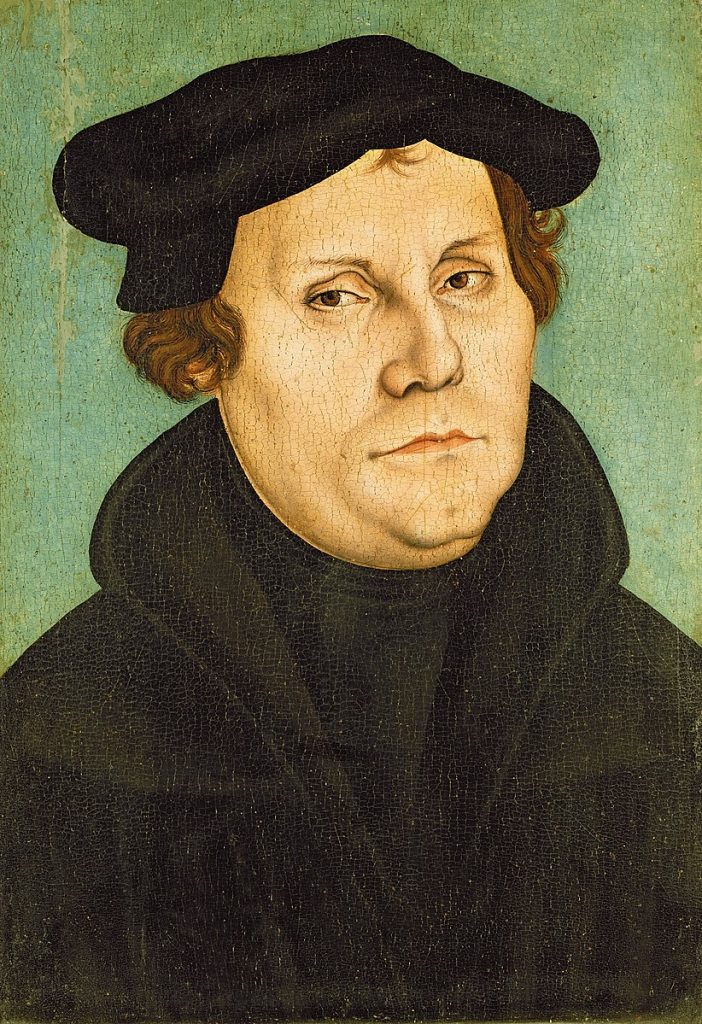
During the second week of the 2026 Wittenberg Summer Course, the focus was on the Wittenberg Reformation and its impact on the European Sister Reformations and early modern culture. On Monday, July 20, Professor Dorothea Wendebourg of Humboldt University in Berlin presented Luther’s hermeneutics of the Bible. She discussed his ideas about scripture and salvation, basing her presentation on a selection of Luther’s prefaces to the Bible and programmatic texts, such as the “Assertio omnium articulorum”. It became clear that Luther’s redefinition of the gospel and apostolicity, his focus on the canon within the canon, and his interest in the Bible’s message profoundly changed how the Bible was understood and used.
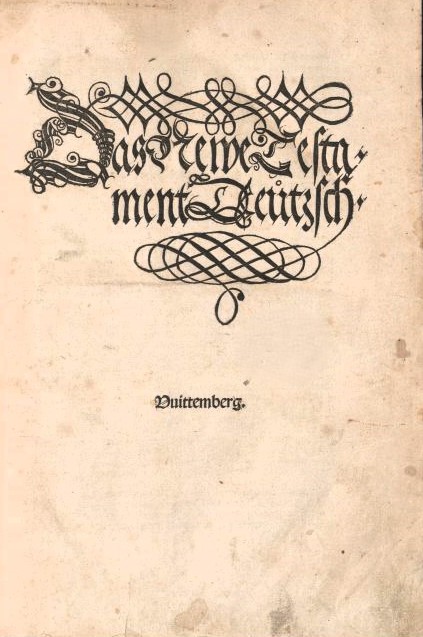
On Tuesday, July 21, Professor Daniele Garrone of the Waldensian Faculty in Rome presented his research on Reformed Bible translations. He contextualized the history of the Olivétan translation within the history of the Waldensians and emphasized the importance of the Latin translations of Tremellius and Junius for early modern Protestant academic culture. The group then read three interpretations from Luther and Calvin on three Old Testament verses: Genesis 3:15, Psalm 22:17, and Psalm 51:7. As an Old Testament scholar, the 2026 Research Fellow is interested in how interpreters of the Old Testament dealt with the philological and theological problems of these verses. Examining Luther’s and Calvin’s interpretations revealed differences between the two: Calvin was more interested in philology, while Luther focused on theology. Nevertheless, both struggled with the textual and linguistic problems, aligning the verses with Reformation theology.
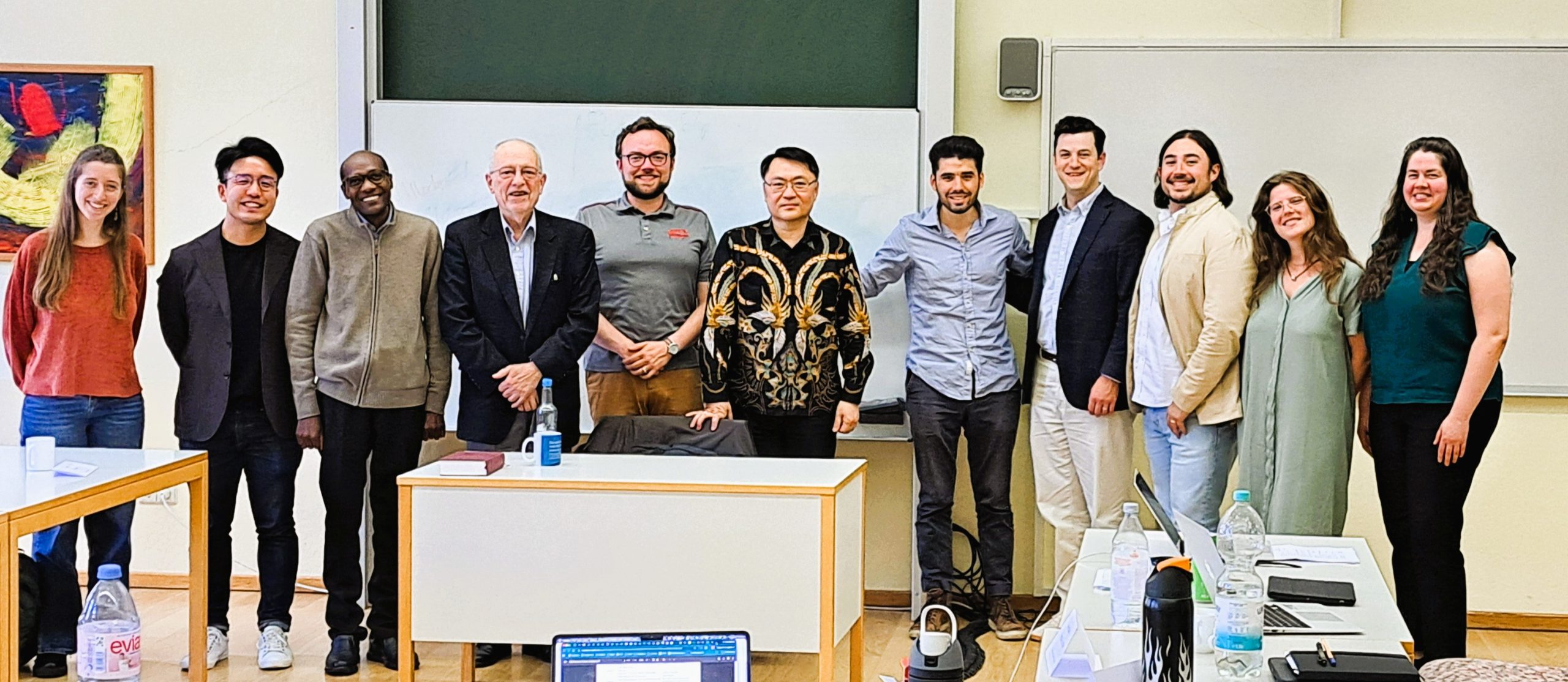
On Wednesday, July 22, the Student Fellows had another study day to prepare for and work on their own research projects. The next day, Thursday, July 23, WCRS director Andreas Stegmann summarized Luther’s hermeneutics and demonstrated some of his key principles by presenting selected texts from Luther’s 1525 “On Bound Choice” (De servo arbitrio). In the afternoon, Prof. Billy Kristanto (Reformed Seminary Jakarta, IREC Berlin) immersed the group into the Lutheran musical culture of the post-Reformation era. He introduced his research on Johann Sebastian Bach, combining theology and musicology. Kristanto analyzed Bach’s use of the Bible in his church music and exemplified his findings with several cantatas that are either about the Word of God or use biblical texts. The importance of music as a channel for propagating the Bible became clear, as did the fact that today’s reception of Bach’s music often does not take this into account.
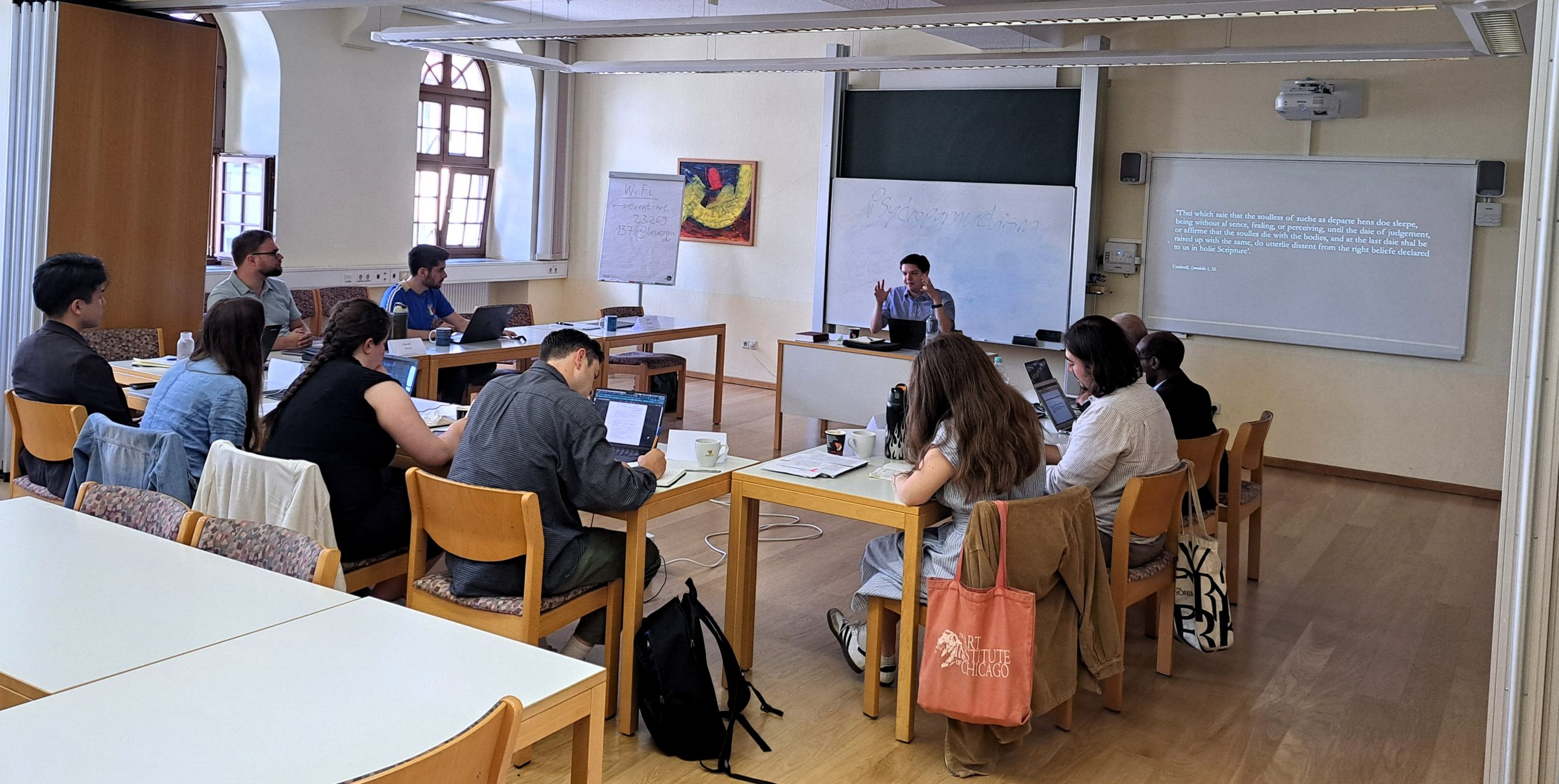
On Friday, July 24, Prof. Colin Donnelly from Oxford University concluded the second week. In the morning, he presented his current research project on soul sleep (psychopannychism), which analyzes Protestant attempts to cope with the loss of purgatory. The issue is not so much a matter of theological debate as it is of practical piety: Where do people go after death? When the body dies and decays, do the souls live on? If so, where are they, and what do they do? What about the first and second resurrection, and what happens in between? Tracking the answers to these questions through the sixteenth, seventeenth, and eighteenth centuries reveals a fascinating perspective on the reception of the Bible. In the afternoon, Prof. Donnelly analyzed John Frith’s (1503–33) disputation about purgatory with the group. Not only does this programmatic text attack the traditional view of the afterlife, but it also presents a new vision of faith and important remarks on Bible hermeneutics.
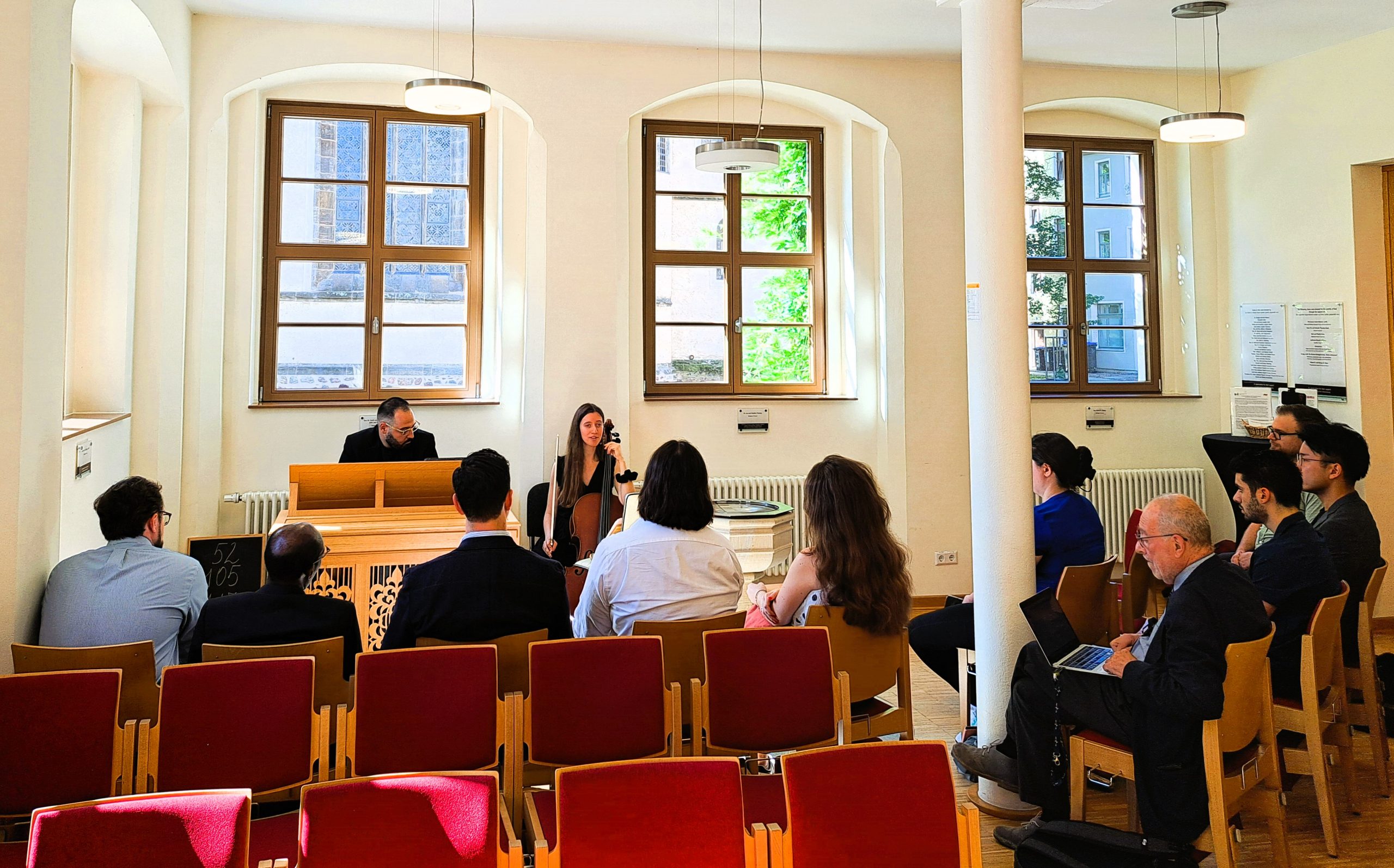
During each of the four days, one Student Fellow presented his or her research. On Monday, Joseandrés Arjona-Garzón presented his PhD project by comparing the theological and hermeneutical ideas of Patristic and Reformation theology. He then analyzed writings by Gregory of Nyssa and John Calvin regarding Genesis 1:26–28 with the group. On Tuesday, Ellie Ketentzian (Ionian University) and her colleague Stylianos Skiadas performed music from the sixteenth and seventeenth centuries. Ketentzian introduced her PhD project, which explores combining cello playing with singing. She then presented on the intersection of music and religion, as well as the differing perspectives of the Greek Orthodox Church, Roman Catholicism, and Protestantism. On Thursday, David Beadle (Duke University) presented his research on the literal sense in Biblical interpretation during the English Reformation, examining Luther’s hermeneutics. On Friday, Winchislaus Lucas Luvakubandi (Gregorian University, Rome) presented his PhD research on the renewal of Roman Catholicism in the nineteenth century, offering new insights on the life and work of Gaspare del Bufalo (1786–1837).