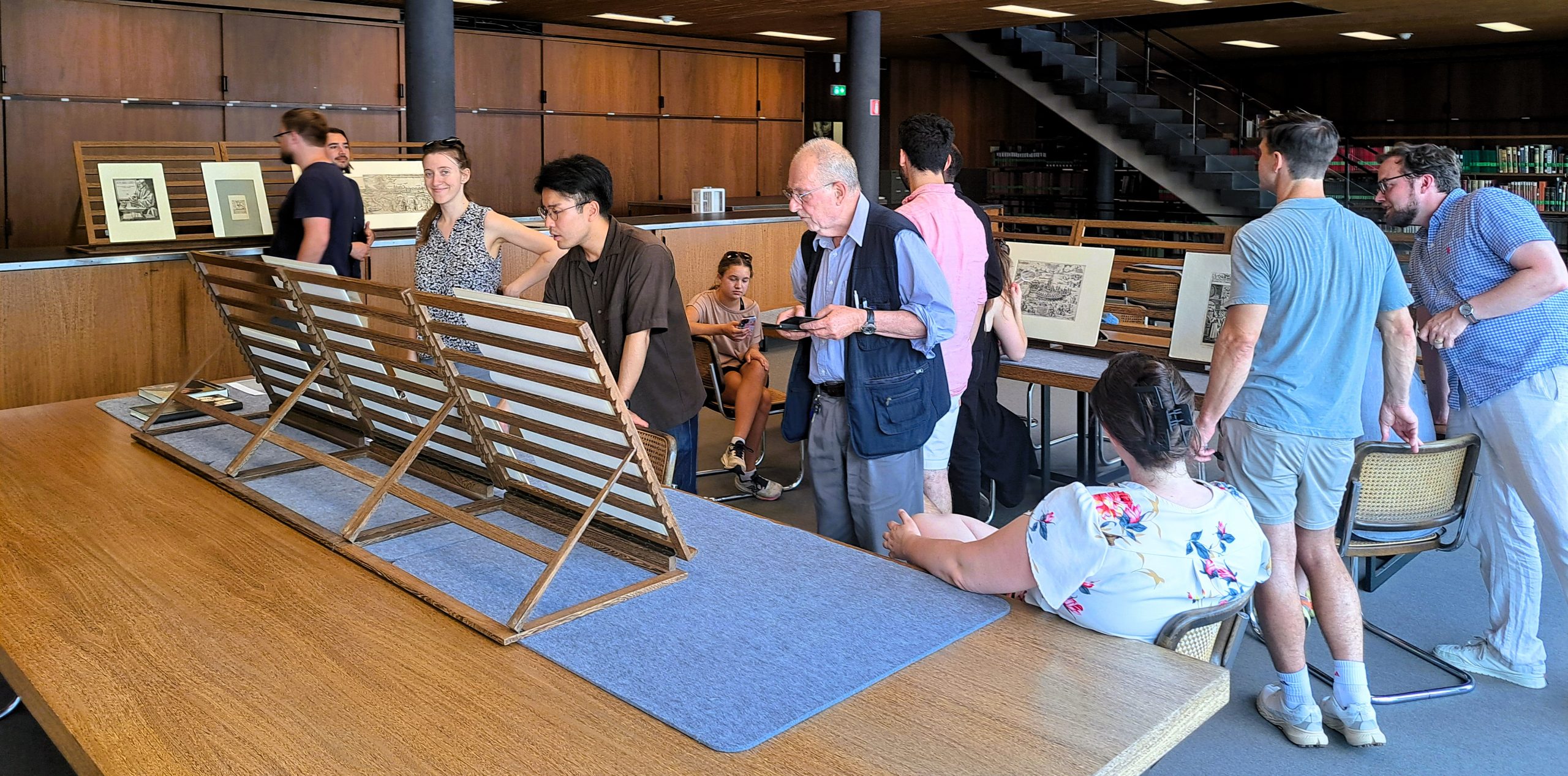

During the second half of the Summer Course, Professor Bruce Gordon of Yale University is in Wittenberg, presenting his research on the reception of the Bible in the sixteenth century and subsequent centuries. On Monday, he introduced the group to Zwingli’s understanding and use of the Bible, exemplifying his analysis with a source study of Zwingli’s prefaces to the Prophets’ Bible (1529), his commentary on Isaiah (1529), and the Zurich Bible (1531). The group examined the Zurich Bible together, analyzing its impressive aesthetics of simplicity and the ways it helped readers better understand the text.
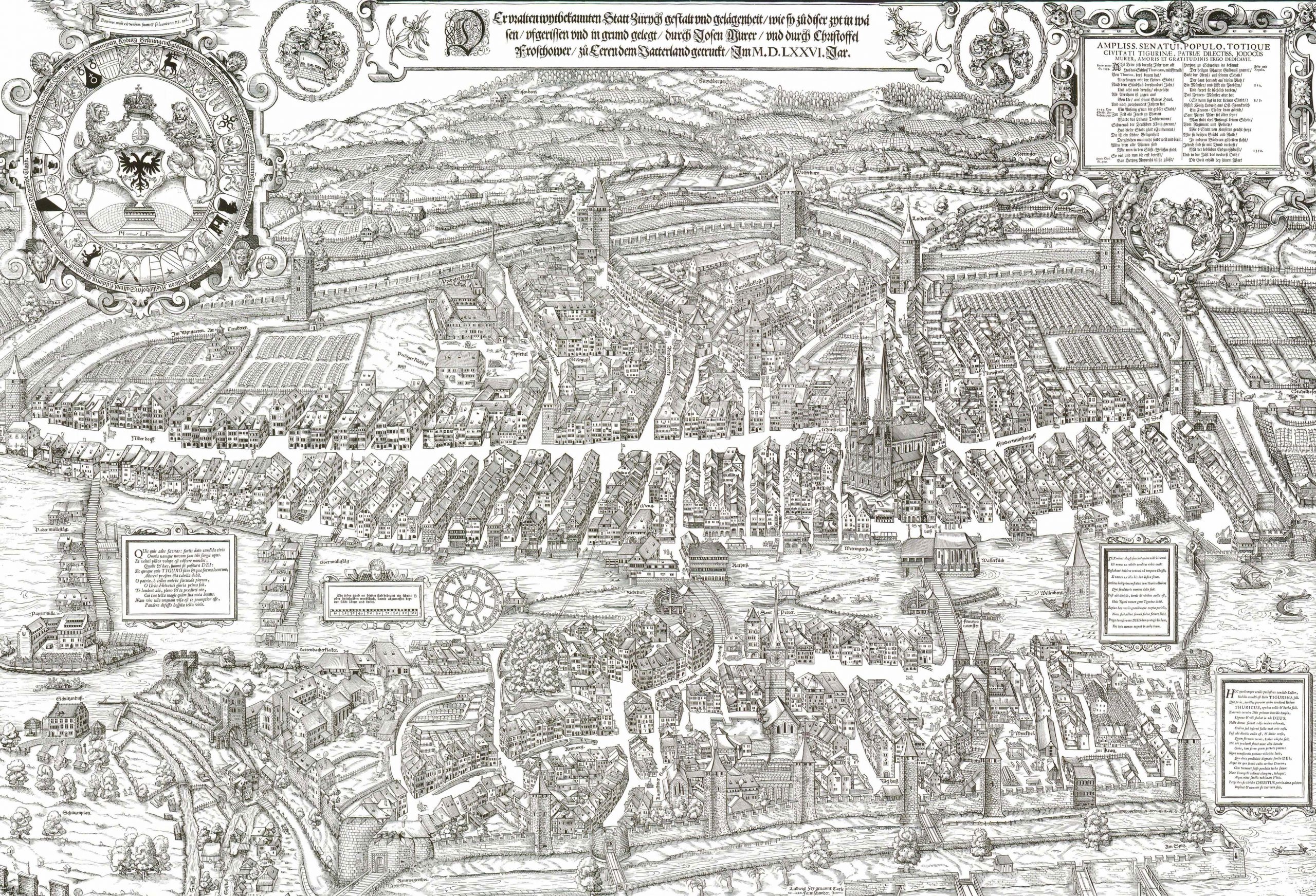
In the evening, Frauke Thees presented her research on the Basel reformer John Oecolampadius, analyzing his relationship with the Bible and its significance for the church and theology in the Upper Rhine region. On Tuesday, Gordon focused on John Calvin’s understanding of the Bible. He took the group back in time to Geneva and read Calvin’s preface to the Olivétan Bible (1534) and his preface to the commentary on Romans (1539), as well as Institutes I.6 and II.22. The group then discussed the similarities and differences between the Wittenberg and Geneva Reformations. Wednesday was a study day.
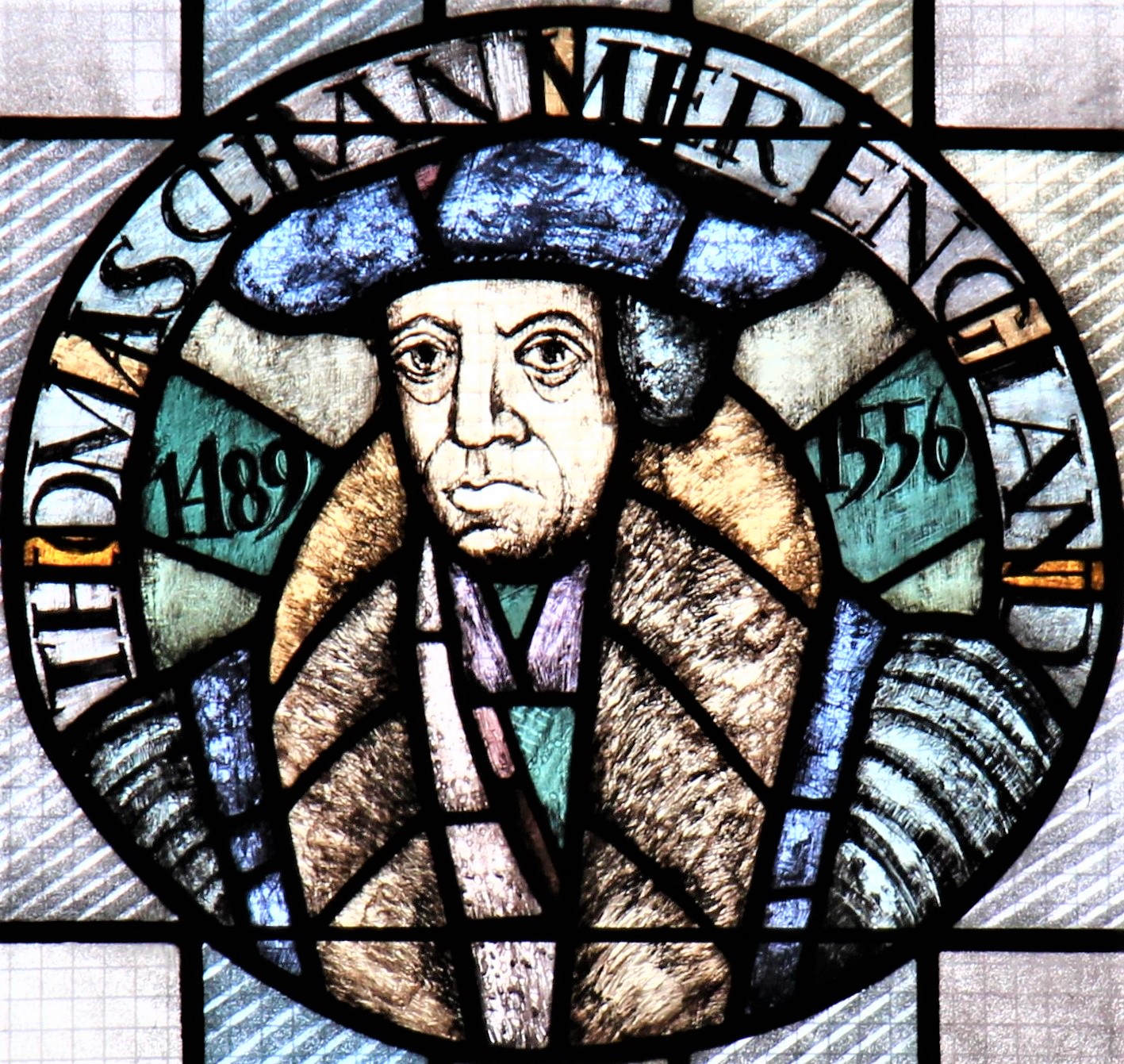
On Thursday, WCRS director Andreas Stegmann introduced the group to Thomas Cranmer’s understanding and use of the Bible. He summarized the groundbreaking research by Ashley Null on Cranmer’s late medieval and humanist background and the importance of the Reformation for his theological development. Examining the 42 Articles, particularly articles 5–6, 18–21, and 33, revealed Cranmer’s mature understanding of scripture. The group then read and discussed the preface to the “Great Bible” (1540) and the homily on scripture in the “Book of Homilies” (1547), both of which are most likely written by Cranmer himself. These texts highlight three characteristics of Cranmer’s interpretation of the Bible. First, he shares the theology of scripture of the continental reformers. Second, he emphasizes the continuity with the patristic use of scripture. Finally, he follows the tradition of English affective theology by stressing the transformative power of the word of God.
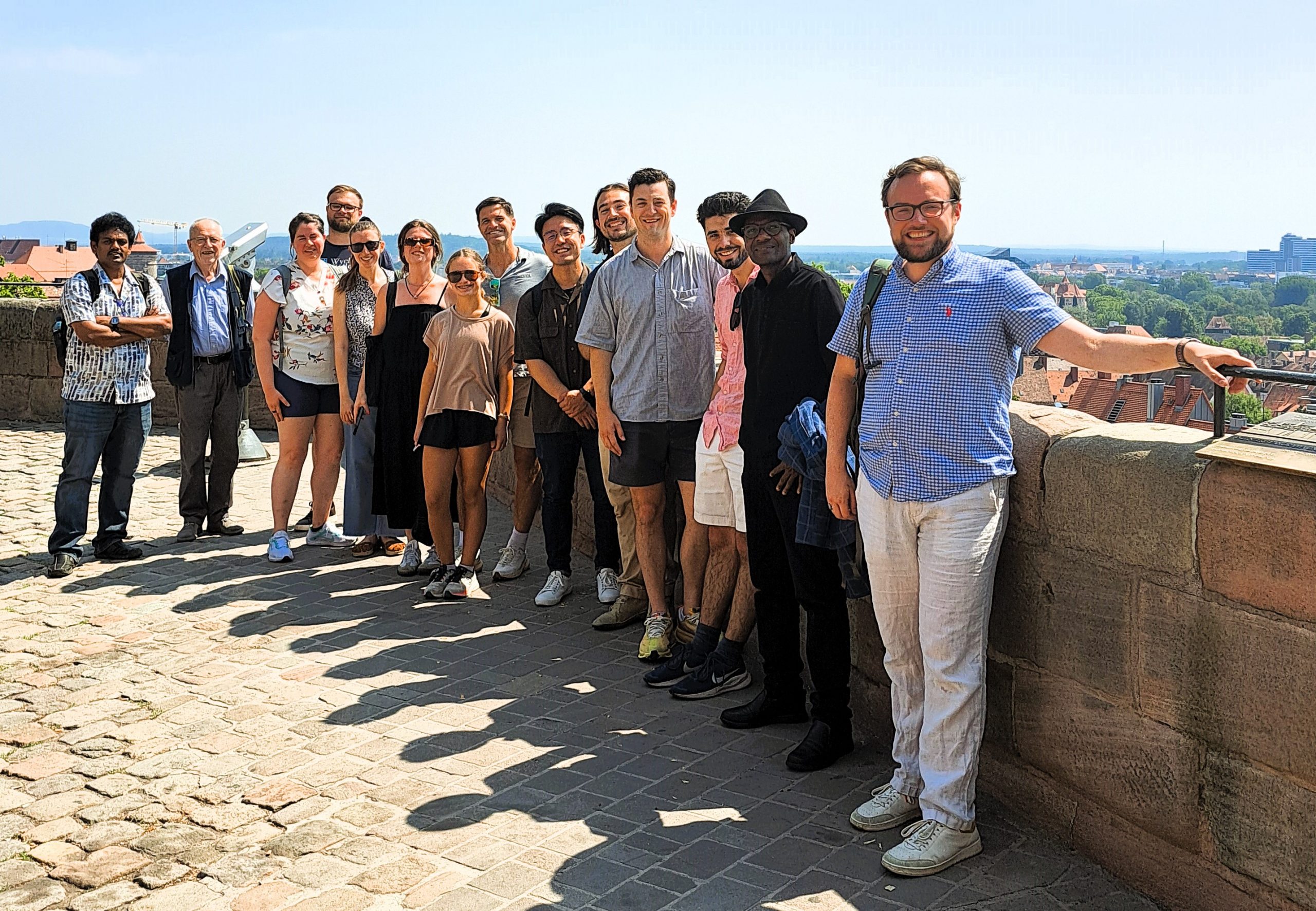
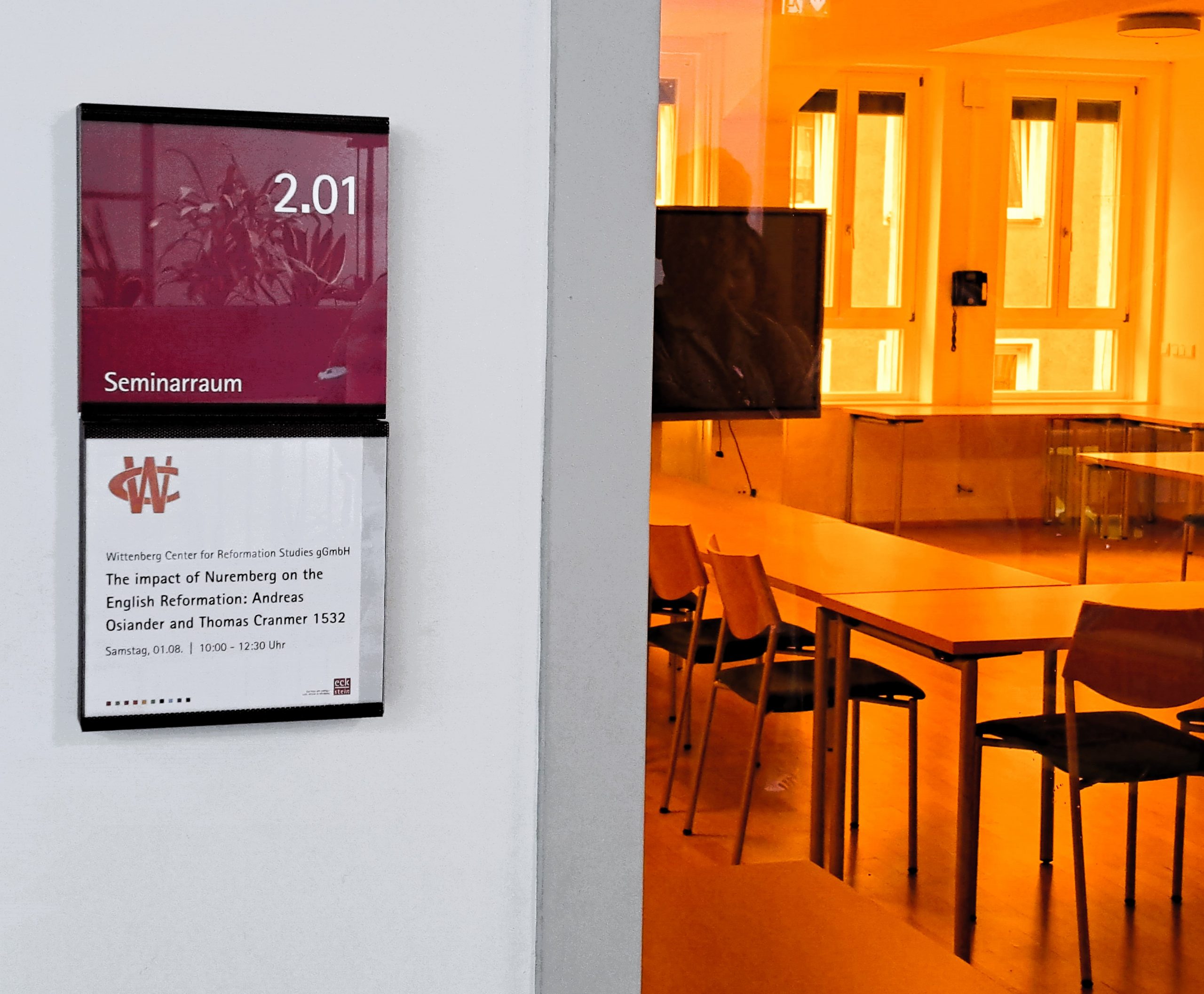
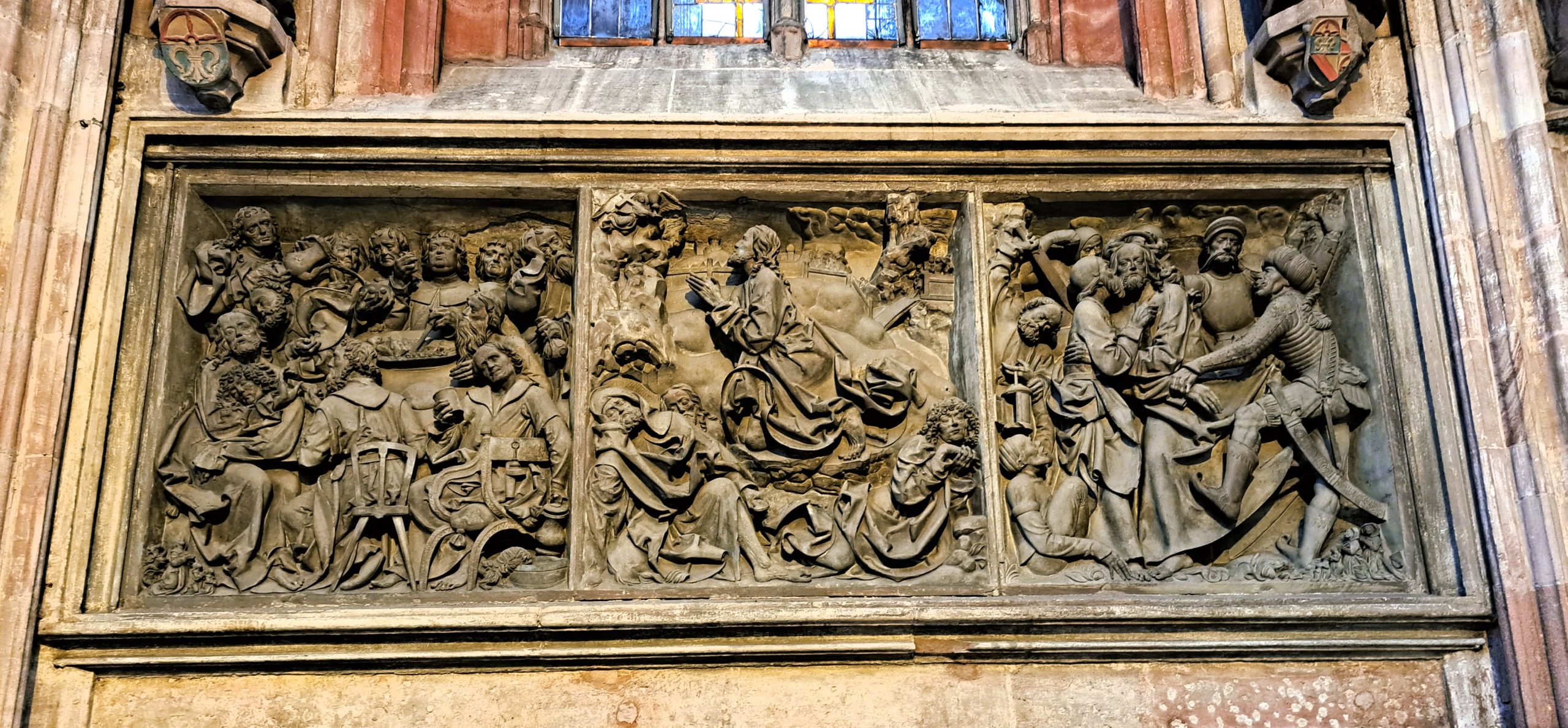
From Friday to Sunday, the group traveled to Nuremberg to learn more about Thomas Cranmer’s involvement in the continental Reformation. Professor Jonathan Linebaugh from Samford University in Birmingham, Alabama, joined the group to share his insights on Cranmer and the Reformation and to get to know the group better. On Friday, the group visited the main sites in the old town. At the Germanic National Museum library, Andreas Stegmann presented a selection of sixteenth-century broadsheets related to the course topic from the museum’s extensive collection. On Saturday, a lecture and a source study examined the meetings between Cranmer and Osiander in Nuremberg in the summer of 1532. The Nuremberg ‘Ratschlag’ of 1524 explains why Osiander interested Cranmer in the Reformation. The Nuremberg reformer shared the basic ideas of an affective, humanist approach to scripture. However, he also incorporated Reformation teachings on justification, law, and gospel, creating an effective way to bring the word of God into people’s lives. Saturday afternoon and Sunday were free of group activities so everyone could explore Nuremberg and enjoy some free time.
The third week included two student fellow presentations. Giuseppe di Massa (Yale College) presented different perspectives on interpreting the Schleitheim articles as a legal document. He argued that a perspective taking the text seriously as an early Anabaptist statement on how to situate this form of Christianity within the political, social, and religious context of the time is valid. Daniela Pusic (Andrews University, Michigan) presented her research on Luther’s rationale for theological polemics. She argued that Luther followed a rhetorical tradition of criticism that addressed controversial issues in the interest of defending the truth.